Modern education is no longer limited to (text-to-speech or text to vocals or audio MP3 down load) textbooks and classrooms. Students today consume information through videos, podcasts, audiobooks, and interactive digital tools. Among these, a free text to speech tool has emerged as one of the most powerful learning aids for students across the world. A text-to-speech (TTS) system converts normal language text into speech.
Whether you are a school student, college learner, competitive exam aspirant, or lifelong learner, converting written content into audio can dramatically improve focus, retention, accessibility, and productivity.
In this comprehensive guide, we explore how students can use a free text to speech tool to study smarter, why audio learning works, how to convert notes into MP3, and how multilingual support (English, Hindi, Telugu, Tamil, Bengali, Malayalam, Kannada) benefits learners in India and the United States.
I used to think that “studying” had a very specific look: sitting in a hard wooden chair, a desk lamp casting a circle of light over a thick textbook, and the sound of a pen scratching out notes until my hand cramped. That was the gold standard. If you weren’t physically tethered to a book, you weren’t really working.
But then life got noisier, and my attention span got shorter. I realized that the sheer volume of text we’re expected to process—whether for a degree or just to stay updated in a career—is actually overwhelming. Modern education is no longer limited to textbooks and classrooms. Students today consume information through videos, podcasts, audiobooks, and interactive digital tools.
Text to Vocals Tools: Turn Written Words into a Realistic Human Voice Instantly
In today’s digital world, voice is becoming the new interface. From audiobooks and podcasts to YouTube videos, online courses, and accessibility tools, people are consuming more audio content than ever before. This rapid shift has made text to vocals tools one of the most powerful and in-demand technologies right now.
But what exactly are text to vocals tools? How do they work? And how can creators, businesses, and educators use them effectively?
Among these, a free text to vocals tool has emerged as one of the most powerful learning aids for students across the world. A text-to-speech (TTS) system converts normal language text into speech.
It took me a long time to realize that listening isn’t “cheating.” In fact, for many of us, it’s the only way to actually get through the reading list without burning out by Tuesday. I started using these tools because I was tired of my eyes blurring after the tenth page of a research paper. What I found was that converting written content into audio can dramatically improve focus, retention, accessibility, and productivity.
Why our brains sometimes prefer hearing to reading
There’s a specific kind of mental friction that happens when you’ve been staring at a screen for eight hours. Your brain starts to skim. You see the words, but you aren’t hearing them in your head anymore.
When I first tried a free text to speech tool, it was purely out of necessity. I had a 40-minute commute and a midterm the next day. I pasted my study guide into a converter, saved the file, and listened on the way. I realized I was catching nuances in the logic that I had completely skipped over while reading at my desk.
Whether you are a school student, college learner, competitive exam aspirant, or lifelong learner, there is something about the human voice—even an AI-generated voice—that makes information feel more like a conversation and less like a chore.
Studying smarter, not just longer
In this comprehensive guide, we explore how students can use a free text to speech tool to study smarter, why audio learning works, how to convert notes into MP3, and how multilingual support (English, Hindi, Telugu, Tamil, Bengali, Malayalam, Kannada) benefits learners in India and the United States.
I’ve spent a lot of time trial-and-erroring different methods to make this work. Here’s what I’ve learned about making the most of this technology without it feeling like another “tech task” on your to-do list.
Making the shift from page to ear
The biggest hurdle is usually the “robot factor.” We’ve all heard those old, janky computer voices that sound like a microwave talking. It’s hard to learn when you’re distracted by weird pronunciations.
However, the modern versions of these tools are different. They have a cadence. They pause at commas. They don’t sound like machines; they sound like someone reading to you. This is vital because if the voice is natural, your brain can relax and actually focus on the content rather than the delivery.
I usually suggest starting with your own notes. We often write things that make sense in our heads but sound confusing when spoken aloud. By hearing your notes, you quickly realize where your own logic has gaps.
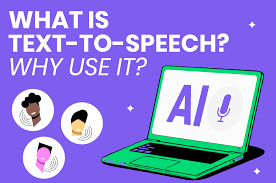
Text to vocals (MP3 download)
One of the best ways to use a free text to speech tool is to stop thinking of it as something you only do at your computer. Free text to voice AI generator
- Step 1: Paste your chapter summary or notes into the tool.
- Step 2: Choose a voice that doesn’t annoy you (this is more important than people realize).
- Step 3: Export it as an MP3.
- Step 4: Move that file to your phone.
Now, that “study time” can happen while you’re at the gym, walking the dog, or sitting on the bus. In the US, where commutes can be long driving stretches, or in India, where transit can be crowded and noisy, having your study material in your ears is a massive advantage. It turns “dead time” into productive time without requiring you to carry a heavy laptop or a physical book. Free text to audio generator AI
The power of regional languages
One thing that often gets overlooked in the tech world is how much language matters to how we learn. In a country as linguistically diverse as India, being forced to learn everything in English can sometimes add an extra layer of difficulty.
The same applies to the US, where many students are bilingual or English is their second language. I’ve seen how transformative it is when a student can take an English text and hear it read in a familiar rhythm, or even use a tool that supports regional languages like Hindi, Telugu, Tamil, Bengali, Malayalam, or Kannada.
Why this matters:
- Comprehension: Sometimes hearing a complex concept in your native tongue helps the “lightbulb” go off.
- Pronunciation: For language learners, hearing the text helps bridge the gap between seeing a word and being able to use it in a conversation.
- Inclusivity: It levels the playing field for students who might be brilliant at the subject matter but struggle with the speed of reading in a non-native language.
Real-world examples of “Audio Productivity”
I remember talking to a law student who was overwhelmed by case files. She started using a free text to speech tool to “read” the background of the cases while she was cooking dinner. By the time she sat down to do the heavy legal analysis, she already had the “story” of the case in her head. She saved hours every week.
Then there was a high school student I knew who struggled with dyslexia. For him, the wall of text on a screen was a literal barrier. TTS wasn’t just a “productivity hack” for him; it was a basic accessibility tool that allowed him to keep up with his peers. Free text to MP3 AI voice generator
A few things I’ve learned the hard way
If you’re going to try this, a few tips from my own mistakes:
- Don’t go too fast initially: It’s tempting to set the speed to 2x to “save time.” Don’t. Start at 1.2x. Your brain needs time to adjust to the synthetic rhythm.
- Follow along (sometimes): If you’re studying something really dense—like organic chemistry or complex physics—try listening while looking at the text. It’s called bimodal learning, and it’s incredibly effective for memory retention.
- Check the MP3 quality: If the tool you’re using produces a tiny, crunchy sounding file, it’ll give you a headache. Look for tools that offer clean, clear audio exports.Free text to voice free
Why this actually matters
At the end of the day, we’re all just trying to keep our heads above water in a world that asks us to know more, faster. Using a free text to speech tool isn’t about replacing the deep, quiet work of thinking. It’s about removing the obstacles that keep us from getting to that work.
Free text to Mp3 download
It makes learning more inclusive for those with different abilities, more efficient for those with busy schedules, and a bit more human for those of us who just need to hear a voice once in a while to stay focused. Whether you’re in a dorm room in California or a study hall in Hyderabad, the goal is the same: to understand the world a little bit better, one sentence at a time.
Why Students Need a Free Text to Speech Tool Today
Students are overloaded with information. Long textbooks, PDFs, lecture notes, online articles, and exam materials can quickly become overwhelming. Reading everything is time-consuming and mentally exhausting.
A free text to speech tool for students solves this problem by turning text into listenable audio, allowing students to learn anytime, anywhere.
Key Challenges Faced by Students
- Limited attention span
- Screen fatigue from long reading sessions
- Time constraints due to classes, exams, and assignments
- Difficulty understanding complex text
- Language barriers for non-native English speakers
Text to speech technology addresses all these challenges in a simple and effective way.
I was talking to a friend the other day who’s currently doing her Master’s, and she looked absolutely drained. She pointed at her laptop screen—three different tabs open with 50-page PDFs—and said, “I’ve read the same paragraph five times and I still don’t know what it says.” Free text to MP3 audio converter
I think we’ve all been there. There is a specific kind of mental wall you hit when you’ve been staring at black text on a white screen for too long. Your eyes start to skip, your brain starts to wander to what you’re having for dinner, and suddenly, two hours have passed with zero progress. Students are overloaded with information. Long textbooks, PDFs, lecture notes, online articles, and exam materials can quickly become overwhelming. Reading everything is time-consuming and mentally exhausting.
It feels like we’re expected to be these information-processing machines, but our brains weren’t really designed to sit perfectly still for six hours a day absorbing dense academic jargon. This is why I’ve become such a huge advocate for changing how we take in that info.
A free text to speech tool for students solves this problem by turning text into listenable audio, allowing students to learn anytime, anywhere. It’s not a shortcut or a way to avoid work; it’s just a way to work with your brain instead of against it.
The struggle is actually real
We often blame ourselves for not being “disciplined” enough when we can’t focus, but usually, it’s just a mismatch between the material and our current state of mind. When you look at the day-to-day life of someone trying to get through school or a competitive exam, the hurdles are pretty consistent.
Key Challenges Faced by Students
- Limited attention span
- Screen fatigue from long reading sessions
- Time constraints due to classes, exams, and assignments
- Difficulty understanding complex text
- Language barriers for non-native English speakers
Text to speech technology addresses all these challenges in a simple and effective way.
Breaking down the mental blocks
Let’s talk about that first one: the attention span. I used to feel guilty about not being able to focus on a textbook for more than twenty minutes. But then I realized that if I listen to an audiobook or a podcast, I can stay engaged for an hour easily. There’s something about the human voice that keeps us grounded. By using a free text to speech tool, you can turn a dry, boring chapter into something that feels like a narrated story. It’s much harder for your mind to drift when someone is “speaking” to you.
Then there’s the physical toll. Screen fatigue is a very real thing. After a day of Zoom classes or staring at Google Docs, the last thing my eyes want is more blue light. Switching to audio lets you close your eyes, or better yet, get up and move. I’ve found that my best “reading” happens while I’m doing something mindless, like pacing my room or doing the dishes. It’s like my body is occupied so my brain is finally free to listen.
Making time out of thin air
The time constraint is probably the biggest stressor. If you have a part-time job or you’re commuting an hour each way to campus, you’re already losing a massive chunk of your day.
I remember when I was trying to balance work and a certification course. I felt like I never had enough time to actually sit down and study. The game changed when I started converting my lecture notes into MP3s. Suddenly, the time I spent on the bus wasn’t wasted. I wasn’t just “listening to music”—I was reviewing the day’s material.
It’s about finding those little pockets of time that usually go to waste. If you can get through three pages of a PDF while walking to the library, that’s three pages you don’t have to stress about later tonight.
Decoding the “Hard Stuff”
We’ve all encountered that one textbook that seems like it was written in a different language even though it’s in English. The sentences are ten lines long and full of words you’ve never heard.
When you read complex text, it’s easy to get stuck on a single word and lose the flow of the whole argument. But when you hear it read aloud by a free text to speech tool, the rhythm of the sentence often makes the meaning clearer. You hear the emphasis, the pauses, and the structure. It’s like having a tutor read it to you; the difficult parts don’t seem quite as intimidating when they have a voice attached to them.
Inclusion and the language barrier
This is especially huge for the community in India and for international students in the US. If English isn’t your first language, reading a dense academic paper is twice as hard. You’re not just learning the subject; you’re translating the language.
Being able to hear the words pronounced correctly while you follow along on the page is a massive help. It builds your vocabulary and your confidence at the same time. Many tools now support regional languages too, which means you can switch back and forth to make sure you really get the concept before you try to write about it in English.
How I actually use it
If you want to try this out, I’d suggest starting small. Don’t try to convert your whole semester’s worth of books at once.
Next time you have a long article to read, just copy the text into a free text to speech tool. Put on your headphones, set the speed to something that feels natural (I usually like 1.2x), and just walk around your room while you listen.
You’ll be surprised at how much more you actually remember. It’s not just about getting through the work; it’s about making the work feel a little less like a chore and a little more like a part of your life.
It’s honestly one of those things that once you start doing it, you wonder why you spent so many years struggling to stay awake over a paper textbook. It’s a simple shift, but for your mental health and your grades, it’s a total lifesaver.
What Is a Free Text to Speech Tool for Students?
A free text to speech tool is an AI-powered application that converts written text into spoken audio without any cost. Students can paste their notes, study material, or articles into the tool and instantly generate clear, natural-sounding speech.
Unlike traditional screen readers, modern AI text to speech tools use neural voice models that sound human-like and easy to understand.
What Makes It Ideal for Students?
- No subscription required
- No recording or microphone needed
- Instant audio generation
- MP3 download for offline learning
- Multiple language support
I remember sitting in a library in college, surrounded by piles of photocopied notes and thick textbooks, feeling like I was physically drowning in paper. My eyes were red from staring at the tiny font, and honestly, the more I read, the less I understood. I’d reach the bottom of a page and realize I’d been thinking about what I wanted for dinner the entire time.
It felt like such a waste of energy. I knew the information was there, but my brain just wasn’t clicking with the medium. That’s when I first stumbled upon the idea of “listening” to my studies. Back then, the options were pretty grim—mostly robotic voices that sounded like they were coming from a dial-up modem. But things have changed so much lately.
A free text to speech tool is an AI-powered application that converts written text into spoken audio without any cost. It’s one of those things that sounds simple, but once you start using it, it completely shifts how you handle your workload. Students can paste their notes, study material, or articles into the tool and instantly generate clear, natural-sounding speech.
Why this isn’t just another “computer voice”
If you’re picturing those old-school screen readers that sound like a glitching microwave, you’re in for a surprise. Unlike traditional screen readers, modern AI text to speech tools use neural voice models that sound human-like and easy to understand. They have these subtle inflections and pauses that make them actually pleasant to listen to. It’s the difference between hearing a machine talk at you and having someone read to you.
I think the reason this has become such a staple for students in both the US and India is that our lives are just too busy to stay glued to a desk. I’ve talked to students in Bangalore who use it to get through their prep while stuck in two hours of traffic, and I’ve seen students in New York use it while walking to their part-time jobs.
What makes it a survival tool for students
When you’re a student, you’re usually broke, tired, and in a hurry. You don’t have the luxury of complicated setups. I’ve found that the best tools are the ones that just stay out of the way and let you get the job done.
What Makes It Ideal for Students?
- No subscription required
- No recording or microphone needed
- Instant audio generation
- MP3 download for offline learning
- Multiple language support
The “No Cost” factor is a big deal
Let’s be real: between tuition, books, and just trying to afford a coffee, students don’t have room for another monthly fee. The fact that you can find a quality free text to speech tool means you don’t have to choose between a study aid and lunch.
I remember trying to find a “professional” solution for a project once, and the second I saw a “Enter Credit Card Info for Free Trial” screen, I closed the tab. You just want something where you can paste your text and hit play. No hoops to jump through.
Removing the barriers to creation
One of the coolest things is that you don’t need any gear. In the past, if I wanted to turn my notes into audio, I’d have to find a quiet room (impossible in a dorm), set up a mic, and record myself reading. It was awkward, and I’d mess up every three sentences.
Now, the “No recording or microphone needed” aspect means you can generate audio at 3 AM without waking up your roommate. You just paste the text and the AI handles the heavy lifting. It’s instant audio generation. You don’t have to wait for a file to process for an hour; it’s just there.
Taking your studies on the road
I’m a huge advocate for getting away from the screen. My best ideas usually come when I’m walking or just moving around. The “MP3 download for offline learning” is probably the most underrated feature.
I used to download my history notes as MP3s and put them on my phone. I’d go for a run or a long walk and just let the notes play in my ears. Because the voices are so natural now, it feels less like a lecture and more like a podcast. By the time I got back home, I’d have a much better grasp of the material than if I’d spent that hour squinting at a PDF.
Plus, for students in areas where internet isn’t always reliable, having those offline files is a lifesaver. You can generate everything while you have Wi-Fi at the library or a cafe, and then you’re set for the rest of the day.
Bridging the language gap
This is a massive point for international students or anyone living in a multilingual household. Multiple language support isn’t just a “nice to have” feature anymore; it’s essential.
If you’re a student in India who’s fluent in Hindi but studying a course in English, or a student in the US trying to master a second language, being able to hear the text read out in different accents or languages is a huge help for comprehension. It helps with pronunciation and, more importantly, it helps the information actually “stick.”
I’ve seen students use these tools to translate their own notes and then hear them back in their native language to make sure they really understood the core concept before they tried to write it out in English. It’s like having a translation and a tutor rolled into one.
A more human way to work
At the end of the day, we aren’t built to be stationary. We’re built to move and to listen. By taking the pressure off our eyes and letting our ears do some of the work, we can actually lower our stress levels.
I’ve found that I’m much less likely to procrastinate on a 20-page reading assignment if I know I can listen to half of it while I’m doing my chores. It makes the mountain of work seem a little bit smaller.
If you’re feeling that “wall of text” burnout, I’d highly recommend just trying it once. Take a few paragraphs of whatever you’re currently struggling to read, paste them into a free text to speech tool, and just listen. You might find that the information goes in a lot smoother when it’s spoken.
Would you like me to help you find a tool that works specifically for your phone or one that has a particular accent you find easier to listen to?
The Science Behind Audio Learning
Audio learning is not just a convenience—it is scientifically effective.
Why Listening Improves Learning
- Activates auditory memory
- Reduces cognitive load
- Improves comprehension
- Enhances long-term retention
- Allows multitasking
Many students remember better when they hear information rather than just reading it.
Audio + Visual = Maximum Retention
Using text to speech while following along with the text combines dual learning channels, which significantly boosts understanding and recall.
How a Free Text to Speech Tool Helps Students Study Faster
1. Converts Notes into Audio Instantly
Instead of re-reading notes multiple times, students can listen to them repeatedly.
2. Saves Time
Listening is often faster than reading, especially for revision.
3. Enables Passive Learning
Students can study while:
- Walking
- Traveling
- Exercising
- Resting
4. Improves Focus
Listening reduces distractions caused by notifications and screen fatigue.
Who Can Benefit from a Free Text to Speech Tool?
🎓 School Students
- Listening to textbooks
- Pronunciation improvement
- Language learning
🎓 College & University Students
- Lecture notes
- Research papers
- Exam revision
📚 Competitive Exam Aspirants
- UPSC, SSC, GRE, GMAT, CAT, JEE, NEET
- Current affairs
- Daily revision content
🌍 International Students
- Better comprehension of English
- Support for native languages
How to Use a Free Text to Speech Tool for Studying
Using a free text to speech tool online is extremely simple.
Step-by-Step Process
Copy your study text (notes, article, PDF text)
Paste it into the text box
Select a language:
Translate text to English speech
Translate text to Hindi speech
Translate text to Telugu speech
Translate text to Tamil speech
Translate text to Bengali speech
Translate text to Malayalam speech
Translate text to Kannada speech
Translate text to Spanish speech
Translate text to Bangladesh speech
Translate text to gujarati speech
Translate text to french speech
Translate text to chinese speech
Translate text to Marathi speech
Translate text to Urdu speech
Translate text to Irish speech
Translate text to swahili speech
Translate text to Filipino speech
Translate text to Afrikaans speech
Translate text to Zulu speech
Translate text to Swahili speech
Translate text to Welsh speech
Choose a voice style
Click “Convert to Speech”
Download the MP3 audio
Listen anytime, anywhere
👉 Try our free text to speech tool for students and convert your notes into MP3 instantly.
Multilingual Learning: A Huge Advantage for Indian Students
One of the biggest barriers to learning is language. Many students in India understand concepts better in their native language.
Supported Languages for Students
- Select a language:
- English
- Hindi
- Telugu
- Tamil
- Bengali
- Malayalam
- Kannada
Why This Matters
- Better conceptual clarity
- Reduced language anxiety
- Faster understanding
- Improved exam performance
Students can study in their mother tongue while still accessing high-quality digital content.
Free Text to Speech Tool for Exam Preparation
Exam preparation requires multiple revisions. Reading the same content repeatedly can be tiring.
How Text to Speech Helps in Exams
- Convert daily notes into audio
- Listen during breaks
- Revise while commuting
- Reinforce memory through repetition
Competitive exam aspirants in India and the US increasingly rely on audio-based revision techniques.
Free Text to Speech Tool for Students with Disabilities
Accessibility is one of the most important applications of text to speech.
Helps Students With:
- Visual impairment
- Dyslexia
- Reading difficulties
- ADHD
A free text to speech accessibility tool ensures equal learning opportunities for all students.
MP3 Download: Study Offline Anytime
Students often face:
- Limited internet access
- Travel time without connectivity
- Device restrictions
With MP3 download support, students can:
- Save audio lectures
- Create custom audio libraries
- Learn offline
MP3 files work on all devices: phones, tablets, laptops, and music players.
Free Text to Speech Tool vs Audiobooks
Audiobooks
- Fixed content
- Limited availability
- Paid
Text to Speech
- Any content
- Fully customizable
- Completely free
Students can turn any text into an audiobook instantly.
Using a Free Text to Speech Tool for Language Learning
Language learners benefit immensely from listening.
Benefits
- Pronunciation practice
- Accent familiarization
- Listening comprehension
- Vocabulary building
Listening to AI-generated speech helps students develop natural listening skills.
Free Text to Speech Tool for Online Learning & E-Learning
With online education growing rapidly, students need flexible tools.
Use Cases
- Online courses
- Recorded lectures
- Self-paced learning
- MOOCs
Text to speech helps students control the pace of learning.
Best Practices for Students Using Text to Speech
1. Combine Listening with Reading
Follow along with the text while listening.
2. Use Short Audio Segments
Break long content into manageable chunks.
3. Repeat Key Sections
Repetition improves memory.
4. Use Headphones
Improves focus and clarity.
Features Students Should Look for in a Free Text to Speech Tool
- Natural AI voice
- MP3 download
- Multiple language support
- No watermark
- Simple interface
- Fast conversion
Our free text to speech tool is designed with students in mind.
Is Free Text to Speech Safe for Students?
Yes. A good free tool:
- Does not require personal data
- Does not store sensitive content
- Works directly in the browser
Students can use it safely for academic purposes.
FAQs – Free Text to Speech Tool for Students
❓ Is this free text to speech tool really free for students?
Yes, it is completely free with no hidden charges.
❓ Can students download audio files?
Yes, MP3 download is supported.
❓ Which languages are available?
English, Hindi, Telugu, Tamil, Bengali, Malayalam, and Kannada.
❓ Can I use it for exam preparation?
Absolutely. It is ideal for revision and concept reinforcement.
❓ Does it work on mobile?
Yes, it works on mobile, tablet, and desktop devices.
How Free Text to Speech Improves Academic Performance
Students who incorporate audio learning often report:
- Better understanding
- Faster revision
- Reduced stress
- Improved confidence
Listening transforms passive reading into active learning.
India vs US: How Students Use Text to Speech Differently
India
- Regional language learning
- Competitive exams
- Mobile-first usage
Text to speech online unlimited free
United States
- Accessibility support
- Online education
- Multitasking learners
A multilingual free text to speech tool bridges both ecosystems effectively.
Future of Text to Speech in Education
AI-driven education tools will continue to grow.
What’s Coming Next
- More natural voices
- Emotion-aware speech
- Personalized learning audio
- Integration with LMS platforms
Students who adopt audio learning early gain a strong advantage.
Conclusion: Study Smarter with a Free Text to Speech Tool
A free text to speech tool for students is not just a convenience—it is a powerful learning companion. By converting text into natural AI voice, students can learn faster, retain more, and study without stress.
With MP3 downloads and support for English, Hindi, Telugu, Tamil, Bengali, Malayalam, and Kannada, this tool is perfectly suited for students in India and the United States.
👉 Start using the free text to speech tool today and turn your study material into audio instantly.