In today’s fast-paced digital world, consuming content through (free text to speech tool) audio is becoming more popular than reading long blocks of text. Whether you are a student, content creator, educator, marketer, or developer, a free text to speech tool can help you convert written text into natural-sounding audio instantly.
With advancements in artificial intelligence, modern free AI text to vocals tools now generate human-like voices that sound clear, expressive, and professional — without requiring expensive software or subscriptions.
In this guide, you’ll learn what a free text-to-speech tool is, how it works, who should use it, and how to convert text into MP3 audio in multiple languages such as English, Hindi, Telugu, Tamil, Bengali, Malayalam, and Kannada.
Let’s be honest: reading through long walls of text is exhausting. Whether you’re a student trying to get through study notes, a creator building a YouTube empire, or a professional multitasking through your day, audio is simply more convenient.
Thanks to advancements in neural speech synthesis, you no longer need a professional recording studio or an expensive voice actor to create high-quality audio. A free text to speech (TTS) tool can turn your written words into clear, expressive, and human-like narration in seconds.
In this guide, we’ll show you how to use AI to generate voiceovers in multiple languages—including English, Hindi, Telugu, malayalam, begali, spanish, … and more—and how to download them as MP3s for your projects.
What Is a Free AI Text to Speech Tool?
A free text to speech tool is an AI-powered software that converts written text into spoken audio at no cost. Instead of manually recording voiceovers, users can paste text into the tool and instantly generate realistic speech output.
Modern AI text to speech tools use neural speech synthesis and deep learning models to mimic human pronunciation, tone, and rhythm. This makes the audio suitable for professional use cases like videos, podcasts, e-learning, and accessibility.
A free text to speech tool is an AI-driven platform that converts written input into spoken audio. Gone are the days of the “monotone robot” voice. Modern AI uses deep learning to mimic human rhythm, tone, and inflection.
For creators and educators, this means you can paste a script and get a professional-sounding voiceover instantly, without spending a dime on hardware or software subscriptions.
What Are Text to Vocals Tools?
Text to vocals tools are AI-powered software applications that convert written text into spoken voice. Unlike old robotic text-to-speech systems, modern tools use advanced neural networks to generate voices that sound natural, emotional, and human-like.
These tools can:
- Read text aloud in realistic voices
- Support multiple languages and accents
- Express emotions like happiness, calmness, excitement, or seriousness
- Produce studio-quality audio in seconds
In simple terms, you type text → the AI speaks it like a real person
Let’s be honest for a second—there is nothing more draining than trying to record a clean voiceover when you’re tired. This is exactly where free text-to-speech tools come in to save the day.
At its core, this is AI-powered software that takes the words you’ve written and transforms them into spoken audio, and it does it completely on the house. You don’t need to set up a microphone or worry about background noise. You just paste your text into the tool, and boom—you’ve got realistic speech output instantly. It’s a massive shortcut that actually works.
And we aren’t talking about that clunky, soul-less “monotone robot” voice from the early 2000s—you know the one I’m talking about. That era is gone.
Modern AI has gotten surprisingly sophisticated. These tools are using neural speech synthesis and deep learning models now, which is a fancy way of saying they actually understand how to mimic human pronunciation. They get the tone right. They nail the rhythm. It makes the audio sound natural enough that you can genuinely use it for professional stuff like video essays, podcasts, e-learning modules, or just making your content more accessible.
For the creators and educators out there, this changes the workflow entirely. It means you can take a script you just finished writing and turn it into a professional-sounding voiceover without spending a single dime on expensive hardware or locking yourself into another monthly software subscription. It’s expressive, it’s clear, and it’s free.
Why Choose an AI Voice Generator?
- Zero Cost: Get professional audio without the studio fees.
- Instant Turnaround: Convert scripts to speech in real-time.
- MP3 Downloads: Save your files locally to use in videos or podcasts.
- Multilingual Support: Reach a global or regional audience effortlessly.
Key Benefits of a Free Text-to-Speech Tool
- No manual voice recording required
- Saves time and effort
- Free to use online
- Supports MP3 audio download
- Works across multiple languages
- Suitable for beginners and professionals
I remember the first time I tried to create a video tutorial with a voiceover. It was about ten years ago. I bought a cheap USB microphone that picked up everything—the hum of my computer fan, the traffic outside, and an annoying hiss that I couldn’t get rid of.
Worse than the gear was the actual recording process. I’d stumble over words, get frustrated, and start over. A two-minute script took me an hour to record, and when I listened back, I genuinely hated the sound of my own voice. It sounded stiff, unnatural, and frankly, amateurish. I scrapped the audio and just used on-screen text.
Fast forward to today, and the landscape is unrecognizable. We are living in a digital world that moves incredibly fast. I find myself constantly overwhelmed by the sheer amount of reading I need to do—articles for work, tutorials to learn new skills, emails, research papers. My eyes get tired long before my brain does.
This is where the massive shift towards audio has changed my daily routine. It’s not just about podcasts anymore. It’s about consuming any written content through audio.
For a long time, “text to speech” meant those awful, jerky, robotic voices that sounded like a 1980s sci-fi movie villain. They were painful to listen to for more than thirty seconds. They didn’t know when to pause for a comma or how to raise their pitch for a question.
But thanks to massive advancements in artificial intelligence, that era is effectively over. Modern AI voices are shockingly good. They breathe, they pause, and they have inflection. They sound human.
If you are a student drowning in PDFs, a content creator trying to keep up with the demands of YouTube or TikTok, or just someone who wants to “read” an article while cooking dinner, a free text to speech tool has become an essential utility, not just a novelty.
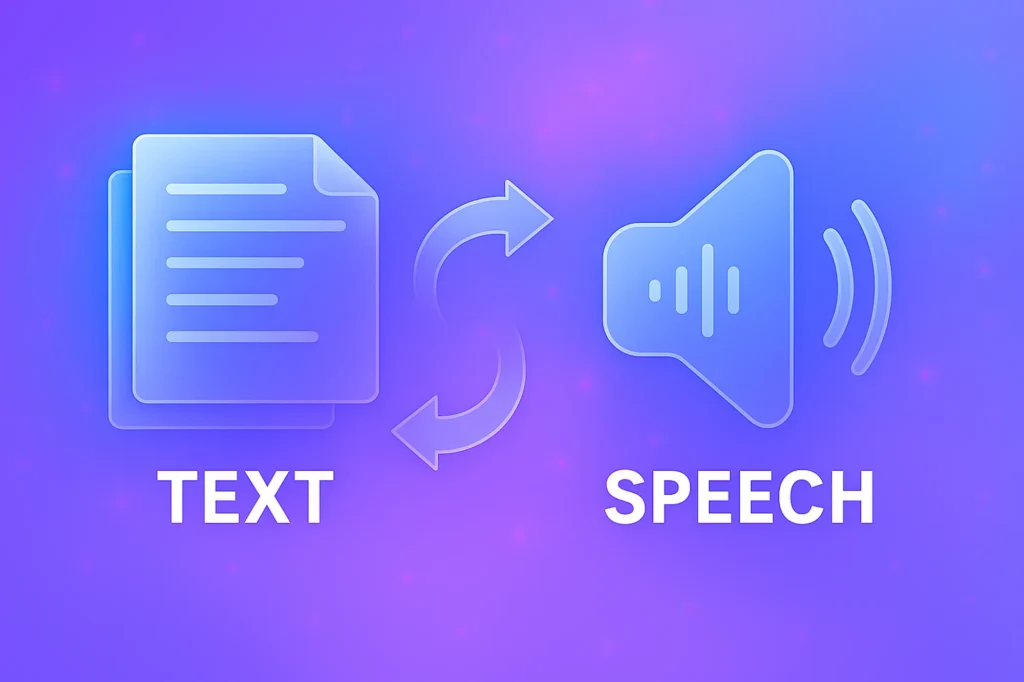
The image above really captures where we are right now. It shows a professional, seamless integration of audio into our workflow. It’s about getting natural, expressive sound instantly, right from the devices we already use. You don’t need a sound booth; you just need a browser.
Here is how these tools have practically impacted my work and life, and why I think they are so valuable for just about anyone today.
The End of Studio Grief
As I mentioned, my early experiences with recording were miserable. If you wanted professional-sounding audio, the barriers to entry used to be enormous. You either needed expensive gear and acoustic treatment in your room, or you had to hire a voice actor.
Hiring talent is great, but it’s slow and expensive. I remember managing a project where we needed voiceovers in three different accents. Coordinating schedules, negotiating rates, and waiting for the files took weeks. And if the script changed? You had to start the whole process over and pay again.
Today, the accessibility of high-quality audio is mind-bending. You can literally type out a script and have a broadcast-quality voice read it back to you seconds later.
- Zero Cost: Get professional audio without the studio fees.
There is something incredibly liberating about working on a passion project with absolutely zero budget and still being able to include a professional sounding narration. You don’t need to compromise on quality just because you don’t have funds.
Speed is Everything
We don’t have the luxury of waiting days for audio files anymore. If a trend breaks on social media, creators need to have a video up within hours, not days. If you are a student waiting until the last minute to study (we’ve all been there), you need your notes converted to audio now.
The immediacy of modern tools is probably my favorite feature. I am terrible for making typos in my scripts. In the old days, a typo meant setting up the mic and re-recording. Now, I just fix the word in the text box, hit the generate button again, and it’s fixed.
- Instant Turnaround: Convert scripts to speech in real-time.
This real-time aspect changes how you work. You can iterate on your script by listening to it. Sometimes sentences look fine on paper but sound clunky when read aloud. Being able to instantly hear the change allows you to edit for the ear, not just the eye.
Usability and Taking it Offline
A tool is only useful if it fits into your actual workflow. I’ve used some online tools that were great, but they locked the audio inside their platform. That’s useless if I need to edit a video in Premiere Pro or if I want to listen to a research paper while on a subway with no Wi-Fi.
The ability to download the file is crucial.
- MP3 Downloads: Save your files locally to use in videos or podcasts.
This seems like a small thing, but it’s vital for creators. Being able to drag a clean MP3 file onto a timeline, chop it up, add background music, and shift the timing is essential for video production. For students, loading up a playlist of “readings” onto your phone for a long commute turns dead time into study time.
Breaking Language Barriers
I’m based in the US, but I work with developers in India and have family scattered across Europe. The digital world doesn’t really have borders, but language is still a massive wall.
I’ve created tutorial content that I knew would be helpful to communities that don’t speak English as their primary language. In the past, I just had to hope YouTube’s auto-captions would do a decent job (spoiler: they usually don’t).
Now, I can take my English script, run it through a translator, paste that text into a free text to speech tool, and select a native-sounding German, Hindi, or Spanish voice. Is it a perfect replacement for a native speaker translator? Maybe not for complex literature, but for instructions, marketing, and education, it’s incredible.
- Multilingual Support: Reach a global or regional audience effortlessly.
This ability to localize content instantly opens up audiences that were previously inaccessible to smaller creators who couldn’t afford localization teams.
Who Does This Actually Help?
I’ve realized that these tools aren’t just for one specific type of person. They solve different problems for different people.
For Students and Lifelong Learners:
The sheer volume of reading required in university is staggering. I recall my eyes glazing over after page twenty of a dense history textbook. Being able to copy and paste that text into a tool and listen to it at 1.5x speed while doing laundry is a vastly superior way to absorb information for many people. It turns passive reading into active listening.
For Content Creators and Marketers:
Text to Vocals Tools vs Traditional Voice Recording
Not everyone wants to be the “face” or “voice” of their brand. Sometimes you want to create an faceless YouTube channel, or maybe you just have a sore throat today but need to get an Instagram Reel out. These tools let you create consistent, high-quality voiceovers without ever stepping in front of a mic. It’s also great for A/B testing ads—you can generate ten variations of an ad script in minutes to see which one performs better.
For Developers:
I have developer friends who use TTS for accessibility testing, ensuring their apps work for visually impaired users. They also use it for quick prototyping. Instead of hiring a voice actor for placeholder audio in a game or app, they just generate it instantly to test the user flow.
Why It’s part of my daily routine
After using these tools for everything from debugging code to trying to get through dense articles, I’ve boiled down why they’ve become a daily utility for me. It really comes down to removing friction and making information easier to handle.
I use them because they just work, without hassle.
Key Benefits of a Free Text to Speech Tool
- No manual voice recording required
- Saves time and effort
- Free to use online
- Supports MP3 audio download
- Works across multiple languages
- Suitable for beginners and professionals
If you are still sceptical because you remember the robotic voices of the past, I highly suggest you just try one of the modern free AI text to speech tools available now. The technology seen in visualizations like the one at the top of this post isn’t futuristic; it’s the current standard. You might find that listening to your content is a lot more pleasant than staring at another screen.
Why Use a Free Text-to-Speech Tool?
Using a free text to speech tool online offers several advantages, especially for users in India and the United States, where digital content consumption is growing rapidly.
Digital content is shifting toward “audio-first.” In markets like India and the US, podcasts and narrated videos are exploding. Here is why a TTS tool is a game-changer:
1. Save Your Budget
Professional voiceover artists can charge hundreds of dollars per hour. A free AI voice tool provides a high-quality alternative for those just starting out or working with tight budgets.
2. Boost Content Production
Recording audio manually takes time—you have to deal with background noise, stumbles, and editing. With AI, you just hit “convert” and your voiceover is ready.
3. Reach More People (Multilingual Support)
If you want to reach the diverse Indian market, you need regional languages. Our tool supports English, Hindi, Telugu, Tamil, Bengali, Malayalam, and Kannada, spanish, allowing you to localize your content instantly.
4. Better Accessibility
TTS technology is a vital tool for the visually impaired or those with dyslexia, making your information accessible to everyone
5. Cost-Effective Solution
Professional voiceovers can be expensive. A free AI text to speech tool eliminates this cost entirely.
6. Faster Content Creation
Convert scripts, articles, or notes into audio in seconds instead of hours.
7. Multilingual Reach
Create content in English and Indian regional languages like Hindi, Telugu, Tamil, Bengali, Malayalam, and Kannada.
8. Accessibility & Inclusion
Text to speech helps visually impaired users and people with reading difficulties access content more easily.
9. Audio-First Learning
Many users prefer listening over reading — especially students and professionals on the go.
Who Should Use a Free Text to Speech Tool?
A free text to speech tool with MP3 download is useful for a wide range of users:
🎓 Students & Learners
Stop squinting at textbooks. Convert your study notes into MP3s and listen to them while you’re at the gym or commuting. It’s a proven way to improve memory retention and pronunciation.
- Convert study notes into audio
- Revise lessons while commuting
- Improve pronunciation and listening skills
🎥 YouTube Creators
Want to start a “faceless” YouTube channel? AI voices are perfect for explainer videos, news summaries, and TikTok/Reel narrations. No microphone? No problem.
- Generate voiceovers without recording
- Create faceless videos
- Save production time and cost
🎙️ Podcasters & Audio Creators
Test out your scripts or create entire podcast episodes using natural-sounding AI narrators. It’s a great way to experiment with different voices and styles.
- Turn scripts into podcast audio
- Experiment with multilingual narration
🧑🏫 Educators & Trainers
Make your lessons more engaging. Create audio-guided slides or provide narrated materials for students who prefer auditory learning.
- Create audio lessons
- Improve learning accessibility
💼 Marketers & Businesses
Want to start a “faceless” YouTube channel? AI voices are perfect for explainer videos, news summaries, and TikTok/Reel narrations. No microphone? No problem.
- Generate audio ads
- Add voice narration to product demos
How to Use a Free Text to Speech Tool Online
Using a free text to speech tool online is simple and beginner-friendly.
Step-by-Step Guide
- Paste or type your text into the editor
- Choose a language (English, Hindi, Telugu, Tamil, Bengali, Malayalam, Kannada)
- Select voice options (male / female, natural AI voice)
- Click “Convert to Speech”
- Download MP3 audio instantly
👉 You can try our free text to speech tool online to convert text into high-quality MP3 audio in seconds.
Languages Supported by Our Free Text to Speech Tool
One of the biggest advantages of this free AI text to speech tool is its multilingual support, making it ideal for both Indian and global audiences.
🌍 Supported Languages
- Translate Text to English speech (Global accent)
- Translate Text to Hindi speech
- Translate Text to English speech
- Translate Text to Tamil speech
- Translate Text to Bengali speech
- Translate Telugu Text to Malayalam speech
- Translate Telugu Text to Kannada speech
- Translate text to spanish speech
This makes the tool perfect for:
- Regional YouTube channels
- Local education platforms
- Multilingual podcasts
- Indian businesses expanding globally
Free Text to Speech Tool with MP3 Download
Many users specifically search for a free text to speech tool with MP3 download, and for good reason. Why settle for a tool that only lets you “preview” the audio? Our tool allows for full MP3 downloads.
- Universal Compatibility: MP3s work on every editing software (Premiere Pro, CapCut, Audacity).
- Lightweight: Easy to share via WhatsApp or email.
- Offline Access: Listen to your converted notes anywhere, even without an internet connection.
Why MP3 Matters
- Universal audio format
- Lightweight and shareable
- Works on all devices
- Ideal for YouTube, podcasts, and learning apps
With this tool, you can:
- Download MP3 audio instantly
- Use it commercially (check terms)
- Reuse audio across platforms
Free Text to Speech Tool for YouTube Videos
YouTube creators increasingly rely on free text to speech tools for YouTube to create faceless and scalable content.
Use Cases
- Explainer videos
- Educational shorts
- Motivational content
- News summaries
- Reels & Shorts voiceovers
Using AI voiceover:
- Saves recording time
- Eliminates background noise
- Ensures consistent voice quality
Free Text to Speech Tool for Students
. Students in India and the US use free text to speech tools to improve productivity.
Benefits for Students
- Listen instead of reading long notes
- Improve focus and memory retention
- Learn while walking or commuting
- Support for regional languages
This makes learning more inclusive and efficient.
I still remember the specific kind of exhaustion that hits around 2 AM during finals week. It’s not just that your body is tired; it’s that your eyes physically refuse to track words across a page anymore. I used to sit there with a highlighter in my hand, staring at the same paragraph of a sociology textbook for twenty minutes, realizing I hadn’t absorbed a single word.
It’s a universal feeling. Whether you are an engineering student at IIT Bombay trying to crack complex mechanics problems or a lit major at NYU wading through hundreds of pages of Victorian novels, the bottleneck is almost always the same: reading fatigue.
We live in an era where we are drowning in text but starved for time. And honestly, the old way of studying—sitting perfectly still at a desk, forcing yourself to read in silence—just doesn’t fit the chaotic reality of student life today. This is where the shift to audio has been a quiet revolution for me and many others. It’s not about being lazy; it’s about survival and efficiency.
I started experimenting with audio tools a few years ago out of desperation. I had a long commute—about an hour each way on a noisy train—and I hated feeling like that time was “wasted.” I tried recording myself reading my notes, but listening to my own voice stumbling over terms was painful. That’s when I started looking for software to do it for me.
Finding a free text to speech tool that didn’t sound like a robot inside a tin can was a challenge back then, but the technology has moved so fast. Today, students in India and the US use these tools not just as a novelty, but as a core part of their productivity stack.
Here is why this shift is happening, and why it actually works better than the traditional “highlight and pray” method.
The Reality of Modern Studying
Why Text to Vocals Tools Are Booming
When you look at the daily routine of a modern student, it’s fragmented. You have classes, maybe a part-time job, social obligations, and the general maintenance of being a human. The blocks of uninterrupted time needed for deep reading are rare.
This is where audio shines. It turns “dead time” into “live time.”
I realized that if I could listen to my history notes while walking to the grocery store or folding laundry, I wasn’t just multitasking; I was actually engaging with the material in a lower-pressure way. It felt less like studying and more like listening to a podcast.
There are massive benefits to this approach that go beyond just saving time.
Benefits for Students
- Listen
instead of reading long notes
- Improve
focus and memory retention
- Learn
while walking or commuting
- Support
for regional languages
This makes learning more inclusive and efficient
Free text to voice converter AI
Let’s break down why these specific points matter so much in the real world.
Escaping the “Wall of Text”
We have all opened a PDF, saw a solid wall of text, and immediately felt our motivation die. It’s intimidating.
Listen instead of reading long notes is about reducing that friction. When you use a free text to speech tool, you aren’t staring at the mountain; you’re just taking the first step.
I found this particularly useful for “first pass” reviewing. Let’s say you have a 30-page research paper to read. Reading that closely might take two hours of high mental effort. Listening to it at 1.5x speed takes maybe 20 minutes. Does this replace deep reading? No. But it gives you the structure. You know the main arguments, the tone, and the conclusion before you ever read a single sentence with your eyes.
By the time you actually sit down to read it for quotes or specific data, the text feels familiar. You aren’t fighting to understand the basic concept anymore; you are looking for nuances. It makes the actual reading phase so much faster.
Popular Use Cases of Text to Vocals Tools
Text to vocals tools are used across many industries.
🎥 YouTube Video Content
Creators use AI vocals for:
- Voiceovers
- Explainer videos
- Shorts and reels
- Motivational and educational content
The Science of Focus
There is a weird phenomenon I noticed when I started listening to my notes: I stopped checking my phone as much.
Free text to audio AI voice generator hindi
When I’m reading a physical book or a screen, my eyes can easily drift to a notification. But when I have headphones on, I’m in a bubble. The audio demands a different kind of attention.
Improve focus and memory retention isn’t just a claim; it’s rooted in how our brains process information. There is a concept called “dual coding.” If you read a text while listening to it, you are hitting your brain through two channels—visual and auditory.
I tried this for a difficult philosophy course. I would put the PDF on my screen and have the TTS tool read it to me simultaneously. It forced my reading pace to match the audio. I couldn’t zone out or skip ahead. It acted like a pacer for my brain. I retained so much more information because I wasn’t just passively scanning; I was actively syncing the sound to the word.
reclaiming the Commute
In cities like Mumbai, Bangalore, New York, or Chicago, the commute is a massive chunk of life. I have friends in India who spend two hours a day in traffic. In the US, subway rides can easily eat up an hour.
Usually, this time is spent doom-scrolling social media or staring blankly at an advertisement.
Learn while walking or commuting changes the equation. I remember preparing for a presentation while walking my dog. I exported my script to an MP3 using a text to speech tool and put it on loop. By the time I got back home, I had the flow of the presentation memorized. I hadn’t opened my laptop once.
This is the definition of “found time.” You aren’t adding more hours to your study day; you are utilizing the hours that were previously useless.
Free text to speech (TTS) AI voice converter
Bridging the Language Gap
This is perhaps the most underrated aspect, especially for international students or those in multilingual regions like India.
Support for regional languages is crucial. English is the primary language of instruction for higher education in many places, but it isn’t everyone’s first language.
I’ve tutored students who understand the complex concepts perfectly but struggle with the density of academic English. Reading takes them three times as long because they are mentally translating every sentence.
When they use a text to speech tool, they can hear the rhythm of the sentence. It aids comprehension significantly. Furthermore, many modern tools now allow you to input text in English and have it read out with a specific regional accent, or even translate and read it in Hindi, Tamil, or Spanish.
For a student in the US learning Spanish, typing their essay into a tool and hearing it read back by a native-sounding voice is an instant error checker. You hear the mistakes you wouldn’t see. For a student in India, hearing a complex English biology term pronounced correctly by the AI helps them speak it confidently in class later.
How to Actually Integrate This Into Your Life
If you want to try this, don’t overcomplicate it. You don’t need to convert every single textbook you own into an audiobook. That’s a recipe for burnout. Start small.
1. The Proofreading Hack
This is the number one way I use these tools today. After I write an essay or a blog post, I paste it into a free text to speech tool and hit play.
Our brains are terrible at proofreading our own writing. We see what we meant to write, not what is actually on the page. But our ears are honest. If a sentence is clunky, too long, or missing a comma, you will hear it instantly. It’s the harsh truth you need before you hit submit.
2. The “Introduction” Strategy
Use audio for the easy stuff. Syllabus introductions, background reading, or summaries. Save your high-energy “eye reading” time for the dense, technical material that requires you to stop and think every few seconds.
3. Speed Control is Your Friend
Most people speak at about 150 words per minute. Most of us can comprehend audio at 250 or 300 words per minute comfortably. Don’t be afraid to crank the speed up to 1.5x or 2x. It keeps your brain engaged. If the voice is too slow, your mind will wander.
The Human Touch in AI
It is ironic that we are using Artificial Intelligence to make our learning feel more natural, but that’s where we are. The robotic, jarring voices of the past are gone. The tools available now offer voices that have breath, pause, and intonation. They sound like a study buddy reading to you, not a machine.
I think that’s why this has caught on so heavily in both India and the US. We are all looking for ways to make the digital grind a little less harsh. We want to learn, but we also want to step away from the screen.
Using a text to speech tool isn’t about cheating the system; it’s about acknowledging that the way we consume information has changed. It allows you to be a student of the world, not just a student of your desk. Whether you are memorizing law cases on the Delhi Metro or reviewing medical notes on a bus in Boston, the ability to turn text into sound is a superpower worth having.
Free Text to Speech Tool for Accessibility
Accessibility is a major ranking and usability factor.
A free text to speech accessibility tool helps:
- Visually impaired users
- Users with dyslexia
- Elderly users
By offering text to speech, you make your content more inclusive and compliant with accessibility best practices.
Features to Look for in the Best Free Text to Speech Tool
When choosing a free tool, ensure it offers:
- ✅ Natural-sounding AI voice
- ✅ MP3 audio download
- ✅ Multiple language support
- ✅ Fast processing
- ✅ No watermark
- ✅ Simple user interface
Our free text to speech tool is designed to meet all these requirements.
Free Text to Speech Tool vs Paid Tools
Many users wonder if a free text to speech tool is good enough compared to paid alternatives.
Free Tool Advantages
- No cost
- Easy to use
- Ideal for beginners
- Great for testing ideas
Paid Tool Advantages
- Advanced voice controls
- Higher limits
- Enterprise features
For most students, creators, and small businesses, a free AI text to speech tool is more than sufficient.
FAQs – Free Text to Speech Tool
Is this text to speech tool actually free? Yes! You can convert text and download your MP3 files without any hidden subscription fees.
Can I use these voices for YouTube? Absolutely. Many successful YouTube channels use AI voices for their narrations to maintain consistency and save time.
Are the voices natural or robotic? We use advanced neural models, which means the voices have natural pauses and human-like intonation.
What is the best format for audio? MP3 is the gold standard because it balances high sound quality with a small file size, making it perfect for the web.
❓ Is this free text to speech tool really free?
Yes, the tool is completely free to use with no mandatory payment.
❓ Can I download MP3 audio?
Yes, you can download the generated speech in MP3 format.
❓ Which languages are supported?
English, Hindi, Telugu, Tamil, Bengali, Malayalam, and Kannada.
❓ Can I use it for YouTube videos?
Yes, it is ideal for YouTube voiceovers and faceless content.
❓ Is the AI voice natural?
Yes, the tool uses advanced AI to produce natural-sounding speech.
Conclusion: Convert Text to Speech for Free
A free text to speech tool is no longer a luxury — it’s an essential productivity and content-creation tool. Whether you’re a student, educator, YouTuber, or business owner, converting text into audio helps you save time, reach wider audiences, and improve accessibility.
With MP3 download support and multilingual output, this free AI text to speech tool is perfectly suited for users in India and the United States.
A free text to speech tool is more than just a convenience—it’s a massive productivity hack. Whether you’re a student trying to study smarter or a marketer trying to reach a wider audience, AI voice technology levels the playing field.
Ready to hear your words come to life? Try our free AI voice generator now and download your first MP3 in seconds!
👉 Try the free text to speech tool now and convert your text into natural AI voice instantly.
SEO Metadata (Internal Use)
- Focus Keyword: Free Text to Speech Tool
- Secondary Keywords: AI voice generator, MP3 audio download, text to speech Hindi, text to speech for YouTube, natural AI voice.
- Meta Description: Convert text to natural AI voice for free. Support for English, Hindi, Telugu, and more. Download high-quality MP3s for YouTube, studies, and podcasts.
Text to Vocals Tools: Turn Written Words into Realistic Human Voice Instantly
In today’s digital world, voice is becoming the new interface. From audiobooks and podcasts to YouTube videos, online courses, and accessibility tools, people are consuming more audio content than ever before. This rapid shift has made text to vocals tools one of the most powerful and in-demand technologies right now.
But what exactly are text to vocals tools? How do they work? And how can creators, businesses, and educators use them effectively?
Let’s explore everything you need to know.
Pingback: Text to Vocals – Convert Text to Natural AI Voice Instantly